
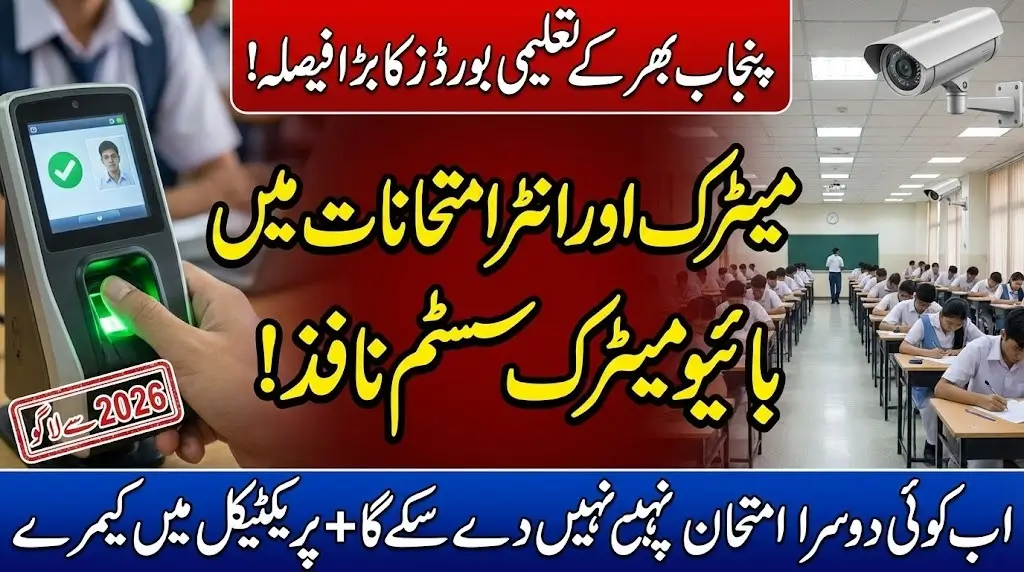
Biometric Verification Matric Intermediate Exams 2026
Biometric Verification Matric Intermediate Exams 2026: The Punjab education authorities have introduced a new digital biometric verification system for matriculation and intermediate exams in 2026. This system aims to improve the credibility of examinations and ensure that only registered students appear in exam halls. By linking student identities with biometric data, authorities seek to reduce incidents of cheating, forgery, and impersonation, creating a fair environment for all candidates.
The initiative reflects the Punjab boards’ commitment to modernizing examination processes and adopting technology-driven solutions. Students will now be identified using fingerprint or other biometric tools before entering the examination hall, ensuring authenticity and accountability in every exam session.
- Digital verification for all students
- Elimination of impersonation and cheating
- Enhanced transparency in examination procedures
How to apply for Maryam Nawaz Nigahban Ramadan Package
Decision by the Punjab Education Boards
The decision to implement biometric verification was made in a high-level meeting at the Lahore Board of Intermediate and Secondary Education. Senior officials from all nine education boards of Punjab participated in the discussion, highlighting the importance of examination reforms for the 2026 academic session.
During the meeting, education authorities emphasized the need for robust mechanisms to prevent malpractice and maintain public confidence in the examination system. The introduction of biometric verification was approved as a key step to modernize exam management across the province.
- Lahore Board led the decision-making
- Participation of all Punjab education boards
- Focus on exam security and reliability
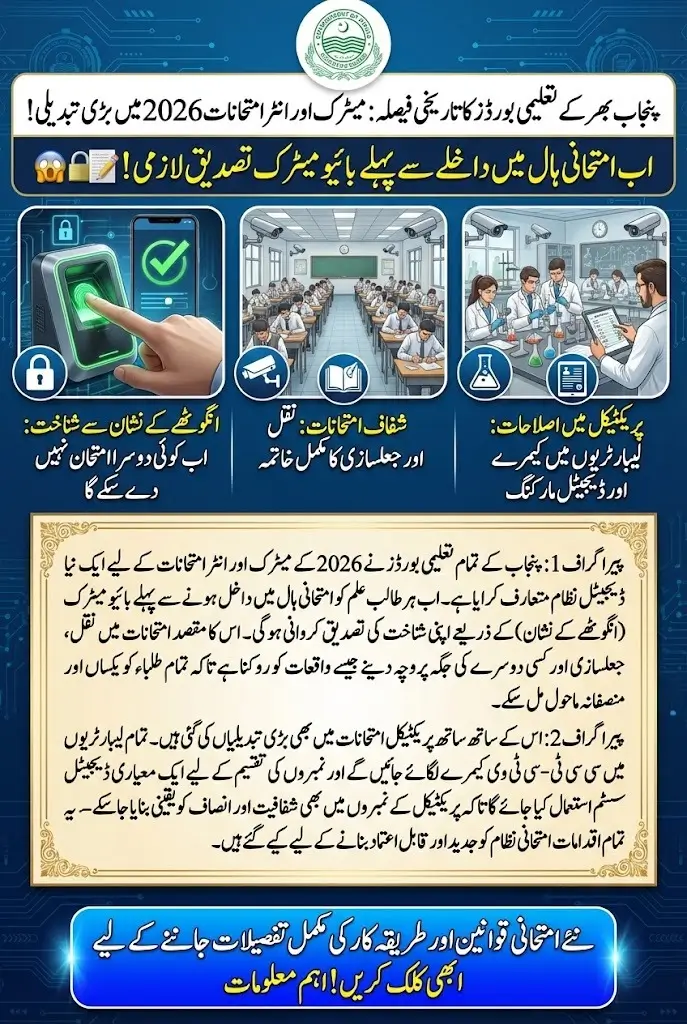
How Biometric Verification Will Be Implemented
Before entering the exam hall, students will undergo biometric scanning to verify their identity. This process will ensure that the registered student is the one appearing for the examination, eliminating any chance of impersonation.
The verification system will be integrated with existing student databases, making it easier for exam authorities to monitor attendance and confirm identities efficiently. Schools and exam centers will be equipped with biometric devices for this purpose.
- Fingerprint or facial scanning for identification
- Linked with the official student database
- Smooth and organized verification process
CM Punjab Ration Card 2026: Requirements, Eligibility, and
Reforms in Practical Examinations
Along with biometric verification, the Punjab boards have introduced reforms in practical examinations. A standardized grading system will now be implemented to maintain uniformity across all education boards.
In addition, laboratories will be monitored with CCTV cameras, and digital marking systems will be used to ensure accurate evaluation. These reforms aim to improve transparency and reduce discrepancies in practical assessments.
- Standardized grading for all students
- CCTV monitoring in labs
- Digital marking for fair evaluation
Impact and Significance of Biometric Verification
The implementation of biometric verification is expected to significantly enhance the integrity of matric and intermediate examinations. Students will benefit from a fair and secure examination environment, while education boards can maintain accurate records and prevent malpractice.
Overall, this move is a major step toward modernizing Punjab’s examination system and ensuring equal opportunities for all students. By adopting technology-driven solutions, the boards aim to uphold the credibility and transparency of future examinations.
| Feature | Purpose |
|---|---|
| Biometric Verification | Confirm student identity |
| CCTV in Labs | Monitor practical exams |
| Digital Marking | Ensure fair and accurate grading |
Honda CB 125F Motorcycle Launch: Is It a Real Upgrade for